Back to Blog
What Are the Optimal CX KPIs for the AI Era?
Most CX and contact center teams still prioritize easy-to-measure yet outdated KPIs. See what's really moving the needle in the AI era.
.webp)

10 min read


.svg)
.svg)
.svg)
AI is changing the math in customer experience.
Where faster speed and increased self-service were prioritized in complex CX environments that require human agents and specialists, now, first contact resolution (FCR) is the north star.
Today’s CX leaders are blending a hybrid mix of automation, GenAI, Agentic AI, and AI-augmented human agents to address inquiries and requests quickly, completely, accurately, and during the first contact.
In this new world, FCR is the most impactful KPI. Here’s why.
In the AI era, old KPIs fall short

When it comes to performance metrics, what’s typically measured is often what’s easiest to measure.
Most CX organizations have a baseline of metrics starting with efficiency and cost, which come standard in most CCaaS and CRM platform reporting.
Are these metrics important to continue to monitor? Yes.
Are these the right KPIs to optimize for? No, simply because they don’t tell the full story.
Consider these two legacy metrics:
Average Handle Time (AHT): the faster the total interaction, the better for the consumer and the business. But with AI on the other end of the interaction, a longer conversation isn’t always a bad thing. Costs are contained, and if the AI resolves more in one touch, even better to optimize FCR.
Imagine you’re assembling furniture. You slow down to follow the instructions step-by-step instead of rushing. It takes longer — but you don’t have to undo anything, and nothing breaks. Time upfront saves rework later.
Deflection: how many tickets are handled without reaching an agent. Yet it, too, fails to tell the full story. A fully automated, self-service experience (whether it was an AI-powered experience or not) isn’t success if the issue isn’t truly resolved, the customer abandons the initial conversation, and then reaches back out a second, third, or fourth time.
Your hair salon calls while you’re in a meeting. You think they’re calling to confirm your appointment, so you ignore it. In reality, they’re calling to reschedule your appointment that evening. Calling back avoids future inconvenience.
Deflection without resolution leads to repeat contacts, rising costs, and eroded trust.
FCR: The new North Star
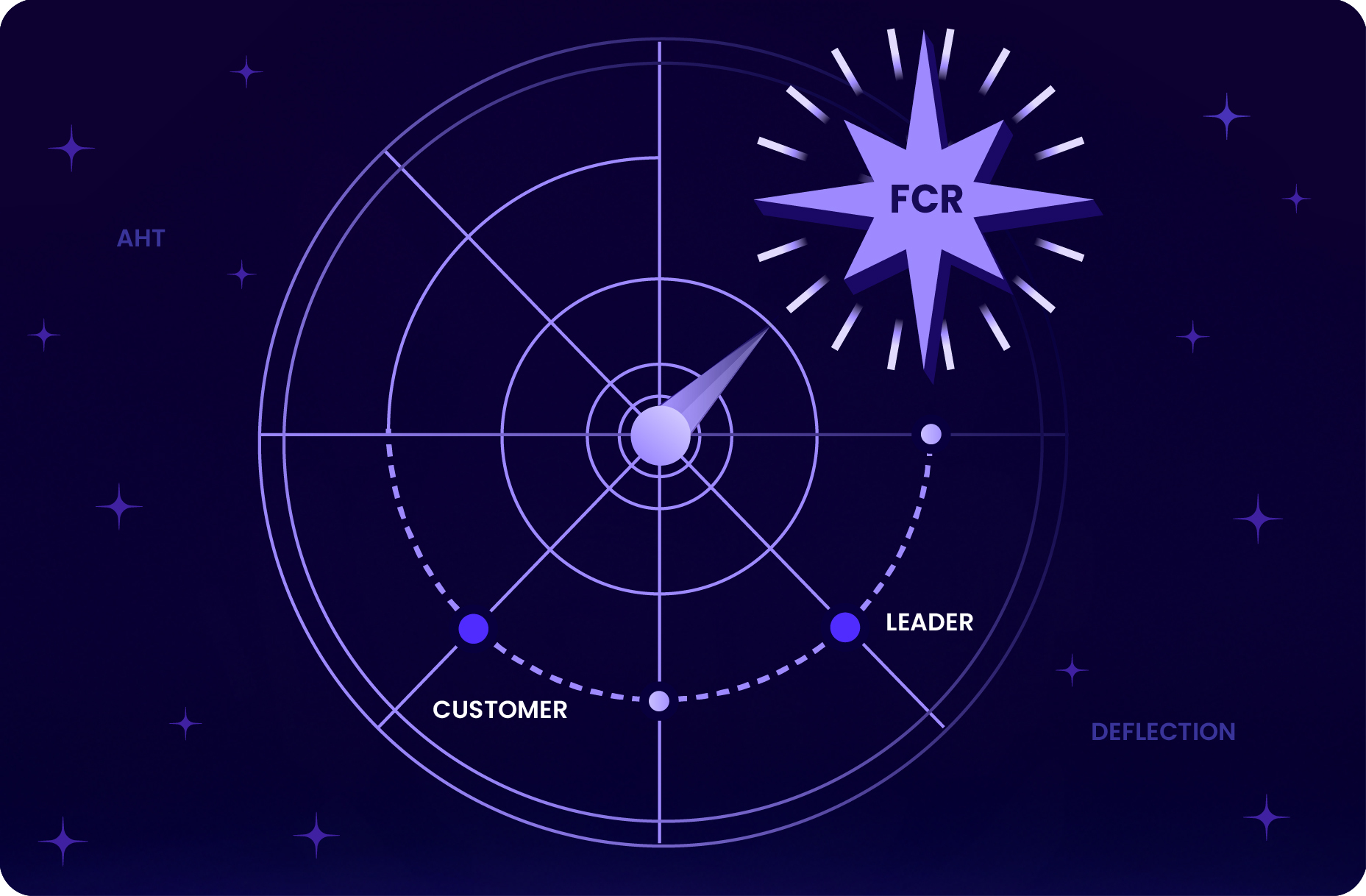
In complex CX environments, FCR is the most strategic KPI.
Optimizing FCR is like a rising tide that lifts all boats, where:
Customers:
- Always each the right person, without being bounced around or misrouted.
- Don’t have to repeat themselves or re-explain their issue across channels or agents.
- Have their issue fully resolved in a single interaction, by someone who knows how to help.
Agents:
- Resolve more issues on the first try—with less need to transfer, escalate, or call back.
- Stay focused on the customer, not on juggling screens, apps, or digging through notes and records.
- Feel more confident and capable, leading to faster resolutions and a more consistent customer experience.
CX Leaders:
- Drive higher CSAT and loyalty by resolving customer issues quickly and completely.
- Improve agent performance and morale by reducing confusion, guesswork, and the frustration of escalations.
- Accelerate agent onboarding by giving new agents clearer resolution paths and fewer edge cases to navigate.
- Reduce compliance risk by minimizing the chances of incorrect answers, missed steps, or undocumented actions.
- Lower operational costs by cutting down on repeat calls, unnecessary transfers, and costly follow-ups.
No second chances in first impressions
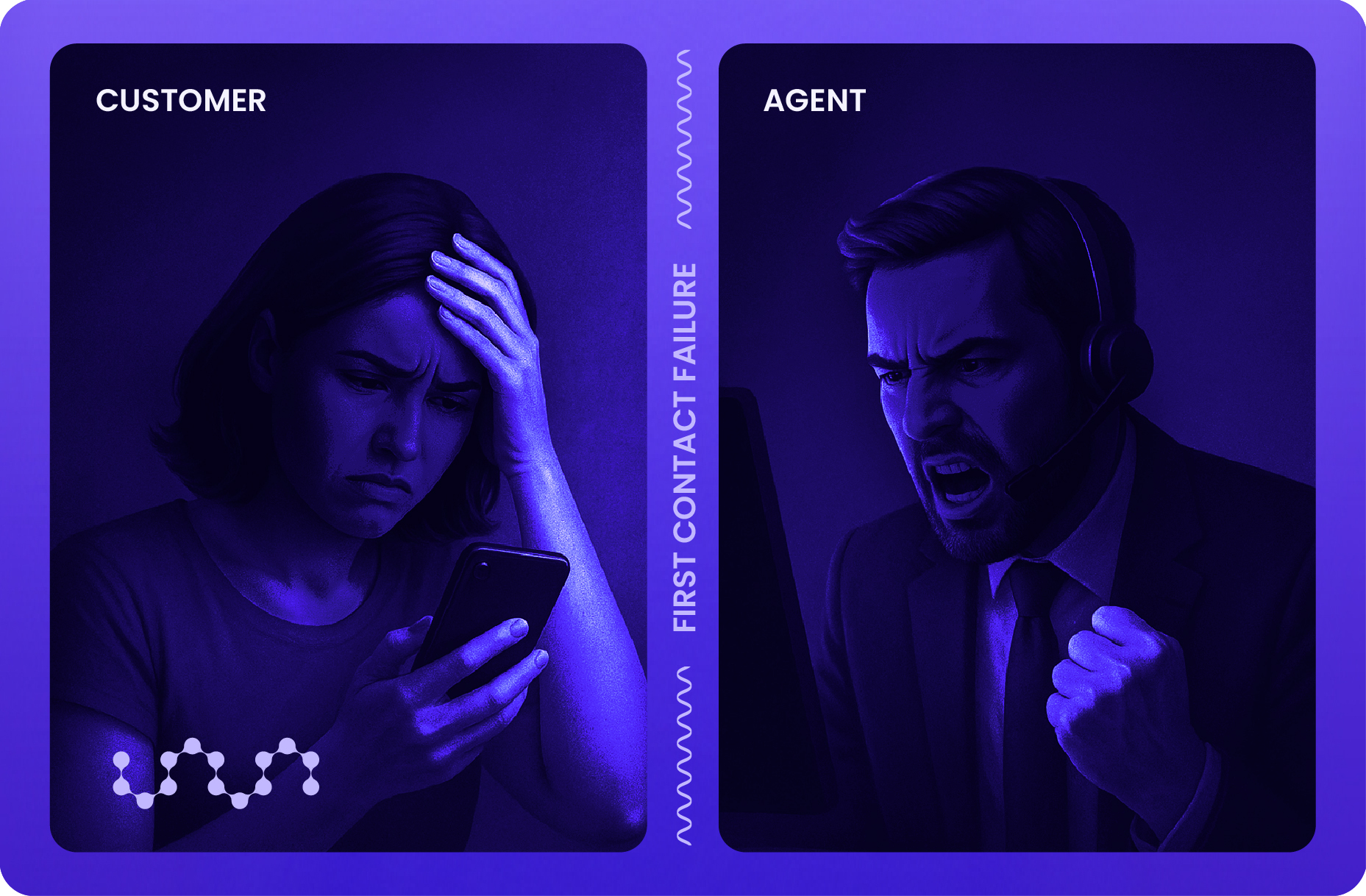
Conversely, if CX leaders let FCR rates slip (or worse, don’t monitor them!), the negative impacts can range from problematic to devastating across many industries.
Fully addressing the customer inquiry at first contact prevents a host of headaches and issues that occur when customers are unable to solve their issue initially.
- In healthcare, delays can disrupt treatment plans.
- In insurance, missed steps can trigger audit risk.
- In banking, unaddressed issues can delay access to funds or trigger account holds.
- In consumer products, support failures lead to returns and lost customers.
- In travel and hospitality, delays can ruin expensive, time-sensitive plans.
- In government services, confusion and poor resolution rates damage public trust.
FCR is better for the customer. It’s better for the agent. And it’s so much better for your business.
How Zingtree helps teams maximize FCR
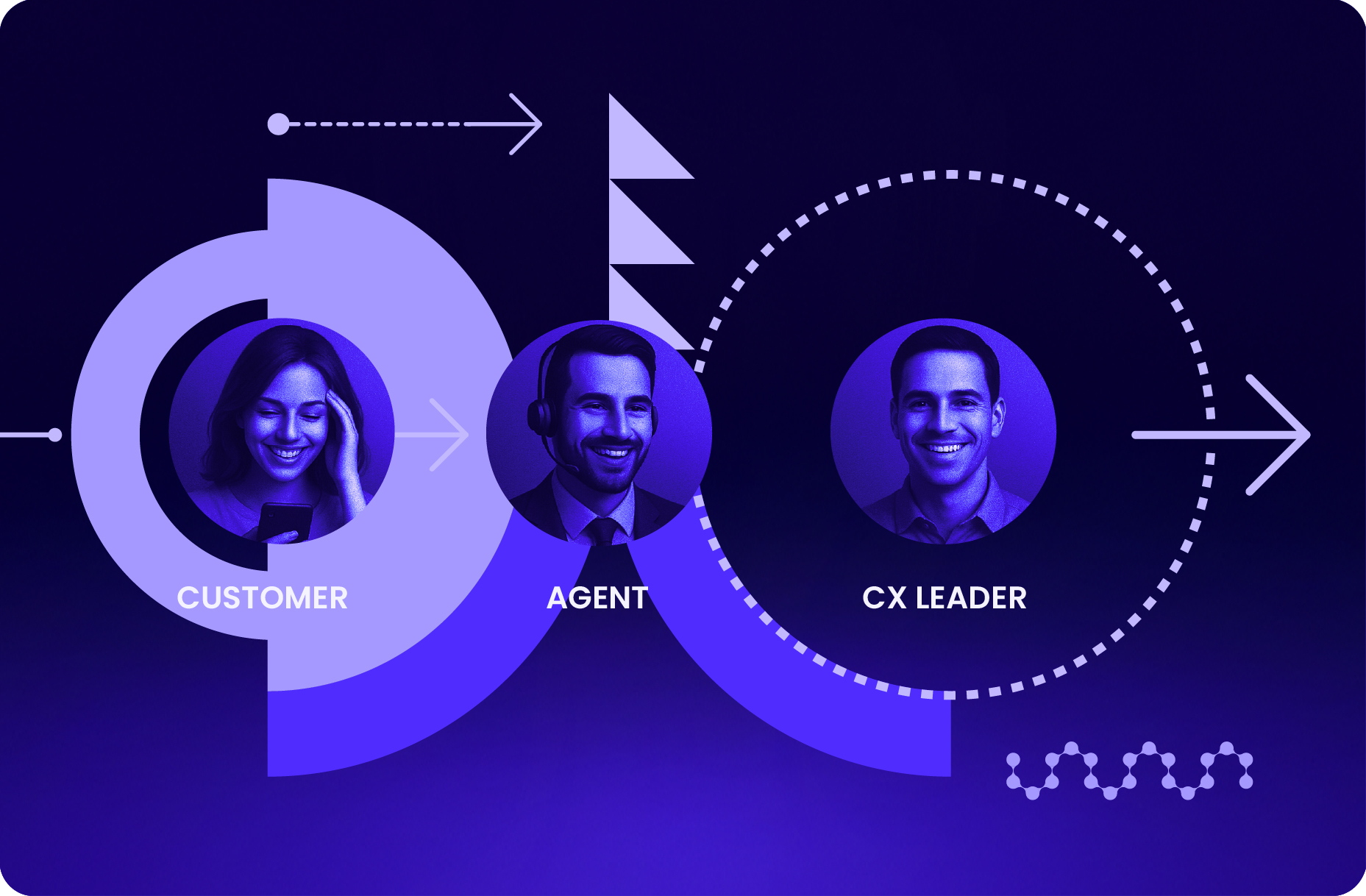
Zingtree was built for complex, regulated, high-risk customer interactions — the ones where getting it right on the first try really matters, and getting it wrong is potentially a massive liability.
We help CX teams resolve faster and smarter by combining:
Structured logic + AI Assist
Zingtree gives agents dynamic, guided workflows built on your business logic — with AI-powered assistance woven in. No guesswork. No missed steps.
While an agent walks through a claims intake flow, Zingtree auto-suggests a next-best action and pulls a relevant policy clause from the KB.
Real-time data + System integrations
Zingtree connects to your CRM, ERP, knowledge base, and more, pulling in the right context at the right time to reduce lookup time and speed up resolution.
Zingtree flows pull ERP inventory in real time, call AI models for diagnostics, and reserve stock instantly.
Compliance by design
Workflows include built-in protocols to meet regulatory requirements (HIPAA, PCI, SOX). Every resolution is auditable, repeatable, and safe.
In healthcare appointment scheduling, Zingtree limits access to PHI based on agent role and logs every access point for audit tracking.
Better agent experience
Zingtree reduces agent ramp time, improves accuracy, and gives your team confidence. That means less burnout, less churn, and faster resolutions.
New agents can navigate state-specific regulations with step-by-step workflows to seamlessly resolve insurance claims like tenured reps.
The bottom line for your bottom line
FCR is the KPI that matters most in the AI era. It aligns business outcomes (cost savings, compliance) with customer needs (accurate, fast, simplified resolution). And it’s the clearest signal that your automation strategy is actually working.
Zingtree helps you get there — with automation that’s transparent, compliant, and always under your control. For example, Zingtree helped 1st Central, a UK motor and home insurer, improve FCR by 10% in 3 months. Pearson, a leading learning company, achieved a 12% resolution rate lift.
In the AI era, success isn’t only about automation and speed, and second chances aren’t guaranteed. You need to get it right, the first time.
Frequently Asked Questions
What are the most important CX KPIs to track in the AI era?
The article emphasizes tracking metrics that reflect both efficiency and quality, including first contact resolution (FCR), average handle time (AHT), customer satisfaction (CSAT), agent productivity, and containment rates for AI-powered self-service.
How does AI impact traditional customer experience metrics?
AI introduces new measurement needs around automation quality, human-AI handoff effectiveness, and self-service containment, while traditional metrics like FCR and AHT remain important but require new context when AI handles portions of interactions.
What is containment rate and why does it matter?
Containment rate measures the percentage of customer inquiries resolved through self-service without requiring agent escalation, making it a critical KPI for evaluating AI and automation effectiveness in reducing support costs.
How should companies balance automation metrics with customer satisfaction?
Companies should track both efficiency gains from AI automation and quality indicators like CSAT and customer effort score (CES) to ensure automation improves rather than degrades the customer experience.
What role does first contact resolution play in AI-powered support?
FCR remains a vital metric in the AI era as it measures whether customers get complete resolutions regardless of channel, helping organizations evaluate the effectiveness of both AI self-service and agent-assisted interactions.
How can organizations measure AI agent performance effectively?
Organizations should track AI-specific metrics including accuracy rates, successful resolution without escalation, handoff quality to human agents, and customer satisfaction with AI interactions to ensure responsible deployment.